












Tanked Water Heaters
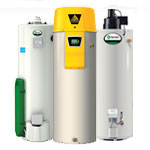
Choosing a new water heater is an important decision for any homeowner. One of the most common and traditional options is the tanked water heater. Another option to consider is a tankless water heater, however both have their advantages and disadvantages. Knowing the differences between the two can be useful as you make the decision if a tanked water heater is right for you.
How Do Tanked Water Heaters Work?
Tanked water heaters store a large volume of water and heat it so it's ready when you need it. Cold water enters through the bottom and is heated by a gas burner or an electric heating element. A thermostat monitors the temperature and turns the heating on and off to keep the water at a consistent temperature. When you turn on a hot water faucet, the incoming cold water pushes the heated water out through your home's pipes. The cycle continues, ensuring a steady supply of hot water.

Advantages and Considerations of a Tanked Water Heater
Here is how a traditional tanked water heater compares with an on-demand tankless water heater.
Advantages of a Tanked Water Heater
- Lower upfront cost. The unit and the installation are usually more budget-friendly than a tankless system, and because most homes are already set up for a tank, replacement is straightforward.
- Hot water to several fixtures at once. Drawing from a reservoir of heated water lets you run a shower and the dishwasher at the same time without a big pressure drop, though it draws the supply down faster.
- Proven, well-understood technology. Tanked systems have been the standard for decades, so parts are easy to find and most technicians know them well.
Things to Consider
- Standby heat loss. The unit uses energy around the clock to keep the full tank hot, even when no one is using it, which can raise your monthly bills.
- Limited hot water supply. Once the tank is drawn down, you have to wait for it to refill and reheat, which can take 20 minutes to over an hour.
- Vulnerable to leaks. Over time the steel tank can corrode and develop leaks, though regular maintenance, especially replacing the anode rod, greatly reduces the risk.
What Size Water Heater Do I Need?
The right size for a tanked water heater depends on how many people live in your home and your peak hot water use. A common guideline is:
- 1 to 2 people: 30 to 40 gallons
- 2 to 3 people: 40 to 50 gallons
- 3 to 4 people: 50 to 60 gallons
- 5 or more people: 60 to 80 gallons or more

What Maintenance Is Recommended For Your Tanked Water Heater?
A few simple maintenance steps go a long way toward extending the life of a tanked water heater, mostly by controlling corrosion and sediment.
- Replace the anode rod. Every tank has a sacrificial anode rod that corrodes in place of the steel tank. Once it wears out, usually every 3 to 5 years, the tank itself starts to corrode, so replacing it on schedule is the single best way to prevent leaks.
- Flush the tank once a year. Draining the sediment that settles at the bottom keeps the unit heating efficiently and prevents popping noises and premature wear.
- Treat hard water upstream. In hard-water areas, minerals wear out the anode rod and the tank faster. A water conditioner or a whole-home water filtration system helps both the tank and the anode rod last longer.
Tanked Water Heater FAQs
A tanked water heater usually costs less upfront than a tankless unit, both for the equipment and the installation, since most homes are already set up for a tank. The final price depends on the fuel type, the tank size, and how involved the installation is. The best way to know is to get an upfront quote from Fritch Inc, who can look at your setup and walk you through the cost.
On average, a tanked water heater lasts 8 to 12 years. Regular maintenance, especially replacing the anode rod and flushing the tank, can extend that. It is a shorter lifespan than a tankless water heater, but tanked units are simpler and less expensive to repair and replace.
It depends on how the unit is fueled and ignited. Many gas tanked water heaters use a standing pilot light, so they keep making hot water during a power outage. Electric models, and some newer gas models with electronic ignition, rely on electricity and will not. If keeping hot water during outages matters to you, ask us which option fits your setup.
When water heats up, it expands. Most homes now have a check valve or pressure regulator on the main water line, which creates a closed system where that extra water has nowhere to go. The resulting pressure spike can stress your pipes and the water heater itself. A small thermal expansion tank gives the expanding water somewhere to go, which protects your plumbing, and current plumbing codes require one on closed systems.
It depends on your priorities. A tanked water heater costs less upfront, is simpler to service, and a gas model can keep working during a power outage. A tankless water heater costs more upfront but uses less energy, will not run out of hot water, lasts longer, and frees up floor space. If you are weighing the two, we are happy to help you compare.
Frequently Asked Questions
What does the Energy Factor (EF) on my water heater mean?
The water heater Energy Factor (EF) is a measure of the overall efficiency of the water heater. This is determined by comparing the energy in the heated water used daily to the total daily energy consumption of the water heater. The EF can be used to compare the energy efficiency of water heaters. Water heaters with higher EFs will have lower annual operating costs than comparable models with lower EFs. A higher EF signifies a more efficient model. Water heaters with high EF ratings may cost more initially, but save energy and money in the long run. Eventually, they will pay for themselves through a lifetime of energy savings.
Where is the
For most water heaters, the anode rod is attached to the hot water outlet of the water heater. If you are facing the front of the water heater (where the labels are), the hot water outlet is on the left hand side. The anode rod is often referred to as a "sacrificial rod".
Most water is rarely "pure". It can contain oxygen, magnesium, fluoride, chlorine and suspended particles. These components, in the concentrations in your water, are usually not bad for you. However, they do contribute to the taste and smell of the water. They also impart a slight conductivity to the water. Through an electrical process called electrolysis, this conductivity will eventually (over a long period of time) cause most metal to rust or corrode. When the water is heated, this electrical process can be accelerated.
Most water heaters are made of a steel tank with a porcelain enamel (glass) lining. However, due to production and assembly methods, it is not always possible to completely cover the inside of the tank. Therefore it is important to provide metal that can be consumed by the electrical process. This is where the sacrificial anode rod comes in. By acting as a lightning rod for the corrosion process, the anode rod draws the harmful electrolytic process away from the water heater tank and focuses the corrosion on the anode rod. Water heaters need this sacrificial anode rod to ensure that the electrolysis does not affect the tanks.
Why doesn't my old water heater make as much hot water as it used to?
The answer may be that you have sediment buildup in your tank. As water heaters age, they tend to accumulate sediment and lime deposits. If the heaters are not cleaned periodically, the sediment may rise to a level that will act as a barrier between the burner and the water, making it harder to heat. An article published in a national ASPE plumbing journal states: for every half inch of sediment on the bottom of a gas fired water heater, it requires up to 70% more fuel to heat the water.
If my water heater was in a flood, do I need to replace it?
Yes. The Air-Conditioning, Heating and Refrigeration Institute (AHRI) recommends that any flood-damaged heating and cooling equipment be replaced, not repaired. From the AHRI website, as it pertains to water heaters:
"Whether your water heater is gas-fired, oil-fired or electric, if it was exposed to flood water, the unit should be replaced. In a gas unit, valves and controls will likely corrode. In an electric unit, the thermostat and controls will likely corrode. In both types, the insulation surrounding the unit will be contaminated and will be nearly impossible to disinfect. Additionally, the insulation would take a long time to dry, leading to corrosion of the tank from the outside.
Even if water heater components have been cleaned and the unit seems to operate properly, parts may corrode in the future. Both gas and electric water heaters have a pressure relief valve that can corrode and stick after being exposed to flood water. Therefore, be sure to replace this valve as well."
(Taken from www.ahrinet.org)
At the suggestion of AHRI, be sure to have your inspection and replacement work performed by a qualified professional.
Can I use my water heater with a solar heating system?
With the increasing costs of energy and a desire for environmental friendliness, some customers are turning to the sun as a way to heat their domestic water. Bradford White manufactures a solar water heating storage tank for use with solar systems. This tank takes the heated water from the solar panels and uses it as a heat source instead of conventional gas, oil or electric heat sources unlike other tanks, this water heater has an electric heating element for back up on cloudy days, and when the solar system is not providing enough heat. However, it is important that you use only POTABLE (or domestic use) water in this tank.
Is a drain pan necessary?
A water heater should be placed in an area that will prevent damage to floors, ceilings, and furniture if the heater leaks. When this is not possible, a drain pan must be installed under the water heater. Since a typical drain pan doesn't hold that much water, it must have a pipe to a drain or other outlet for the water. When installed properly, a drain pan and pipe will keep any leakage under control and protect your belongings from water damage.
What type of maintenance should I do on my water heater?
We recommend that you contact a plumbing professional to perform any maintenance or repairs to your water heater - from periodic checks on the anode rod to ensuring that all connections are secure. Recommendations for maintenance are in your water heater's owner manual. However, there are a few things that you can do:
- Ensure that there are no sources of flammable vapors in the same area as your water heater (this includes gasoline, heating oils, lighter fluid, propane, etc.).
- Keep the top of the water heater clean. If you notice water dripping on the water heater from any piping, contact a plumbing professional to have the leak repaired.
- Keep the space around your water heater clean and free of dirt, boxes, paint cans, aerosol cans, household cleaners and trash. It is important to keep the heater accessible for proper operation and easy maintenance.